Prep kitchen ideas - How sculleries add functionality to your space
When renovating a modern kitchen, consider your actual lifestyle. Think about how you perform daily kitchen tasks, how you entertain on a Saturday night, and how much visual mess you are willing to tolerate.
Secondary kitchens, once considered outdated and overluxurious, are making a comeback in North America. Not because they are in trend now, but rather because back kitchens solve very real problems such as cluttered counters, overloaded appliances and messy cooking. The main kitchen remains welcoming while the cooking, cleaning and organization take place behind closed doors.
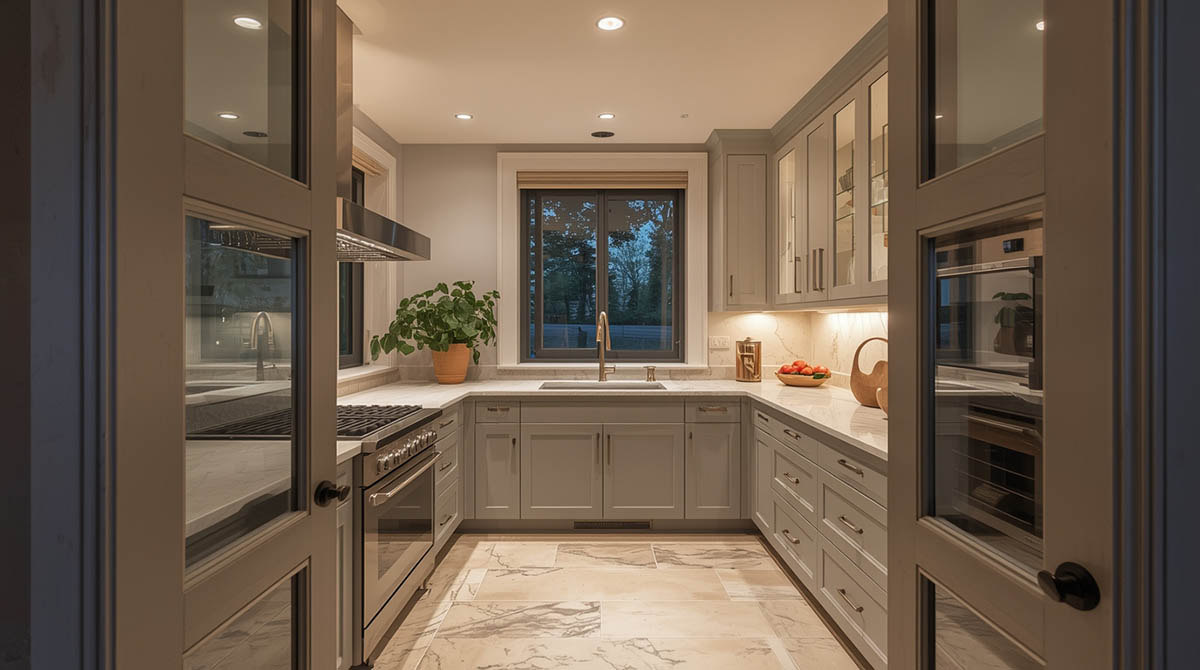
What is a prep kitchen and how it works
A modern scullery is what it sounds like - it allows the homeowner to batch-cook or meal prep efficiently and keep their main kitchen clean even on busy days.
At its core, the purpose of a scullery is to complement the primary cooking space. It takes care of all the noisy, odorous and appliance-heavy jobs so your main kitchen can stay clean, social and visually composed.
A functional home prep kitchen will usually contain:
-
Addition of counter space for food preparation;
-
Secondary sink (often deeper, more functional);
-
Small appliance storage and pantry space.
A scullery is often located directly behind or next to the main kitchen. It's usually separated by a door or a hidden opening. It can be used as an extension to the main cooking place, without disrupting social areas or sightlines.
When a back kitchen makes sense for your house
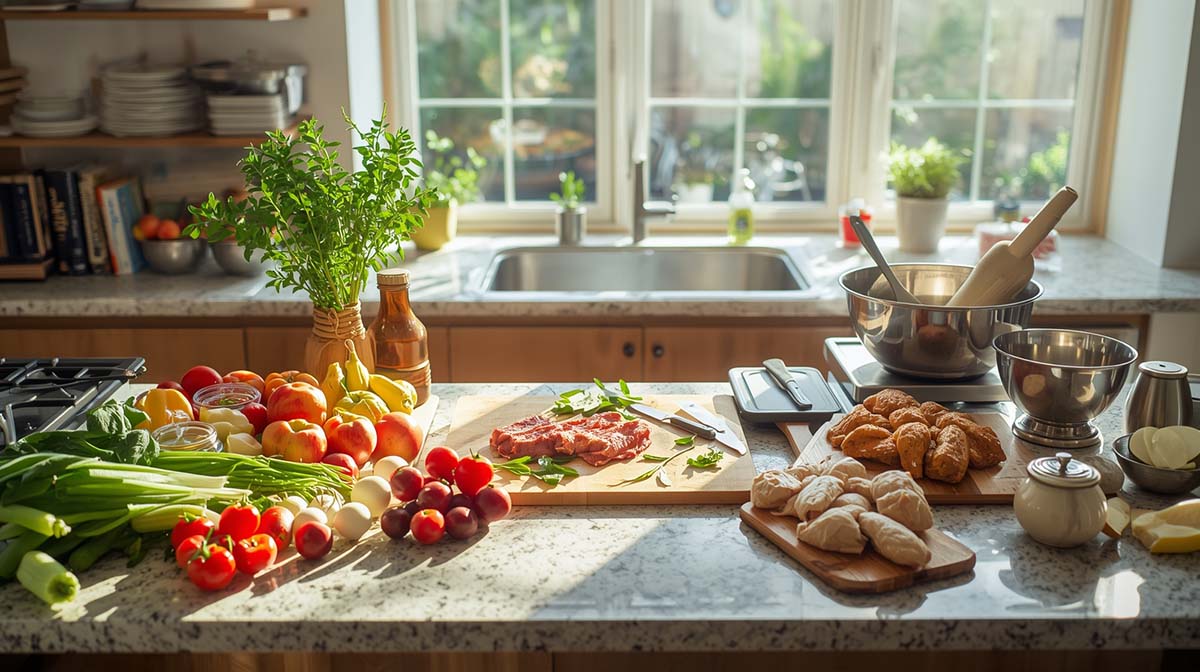
You should consider a kitchen scullery if:
-
You have an open-plan kitchen-living room
This arrangement is especially valuable in open-plan homes that dominate the Canadian housing market. The kitchen looks neat even if you are cooking a lot. -
The main kitchen can't expand any further
Space is needed for batch cooking, weekday meals, and a growing number of countertop appliances. Instead of compromising the aesthetics in the main kitchen, the prep kitchen can absorb these needs efficiently and quietly. -
You entertain often
A modern scullery kitchen has a completely different function for homeowners who enjoy entertaining. The prep kitchen becomes a place to prepare food and do the dishes without interfering with the social atmosphere in the main area.
In many modern homes, the back kitchen might be a hybrid of a scullery, a pantry and a utility room. Cabinetry often mimics the finishes used in the primary space, creating a cohesive look while remaining functional.
Scullery layouts and floor plans
It is not necessary to have a large kitchen scullery, but the layout must be well-planned. The best prep kitchen layouts balance movement, storage and accessibility. Every cabinet, surface and opening should have a purpose, as these spaces were designed to be used for work.
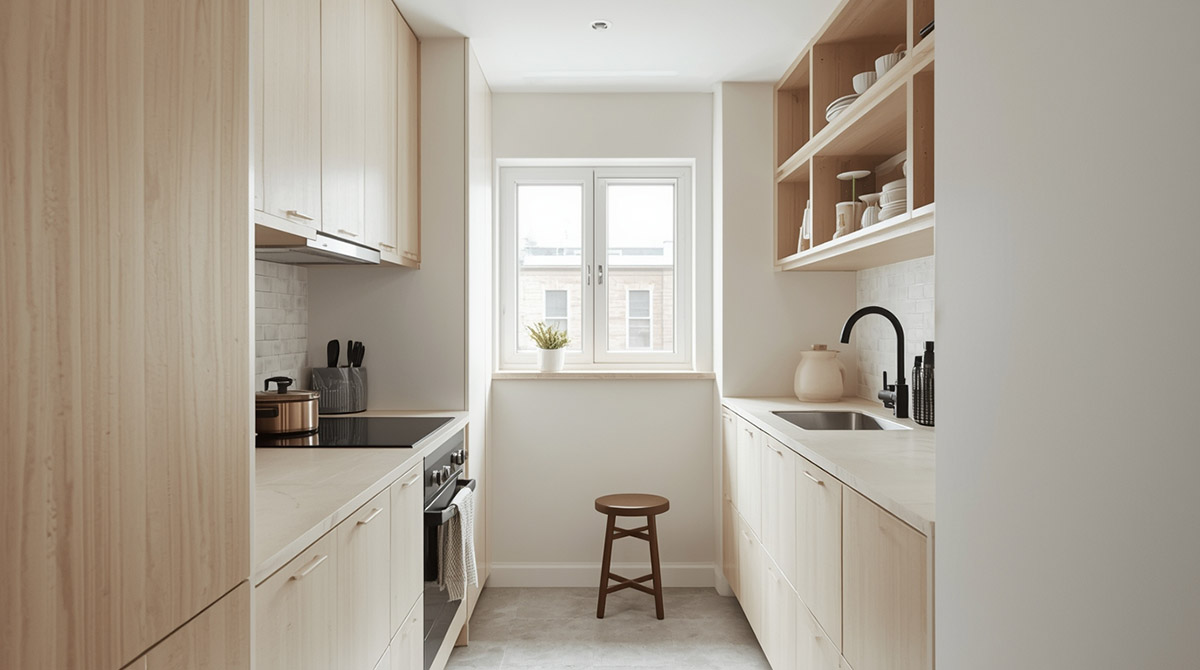
The following are some common scullery design ideas that work:
-
One-wall prep kitchen
This prep kitchen design is ideal for condos or small homes, as it places all the functions in a single line of cabinetry. Tall cabinets are often placed at the end, while open shelves are located above the base cabinets and counters. This arrangement is ideal for small spaces. -
Galley-style prep kitchen
Two parallel cabinet rows create a highly functional workspace. When cabinetry runs on both ends, everything is at your fingertips, reducing movement and creating an efficient workspace. -
Compact L-shaped layout
L-shaped cabinets are ideal when space is available in a corner. They allow you to store appliances without sacrificing prep space.
Planning for a small prep kitchen layout
Designing small sculleries requires even greater attention to detail. Cabinet depth, appliance placement and internal organization are important. In such cases, well-designed cabinetry can make the difference between a cramped utility room and a highly functional back kitchen design. A little planning can make even modest spaces perform beyond their square feet.
Small scullery design ideas work when cabinetry is:
-
Full-height storage (to maximize vertical space);
-
Fitted with internal organizers
-
Designed with slimmer cabinet depths where possible.
Vertical thinking is beneficial for smaller sculleries. Tall cabinets, carefully planned shelving, and thoughtfully considered door swings make even a small footprint seem generous. Custom cabinetry designed for the space can accommodate a variety of functions, even in limited dimensions.
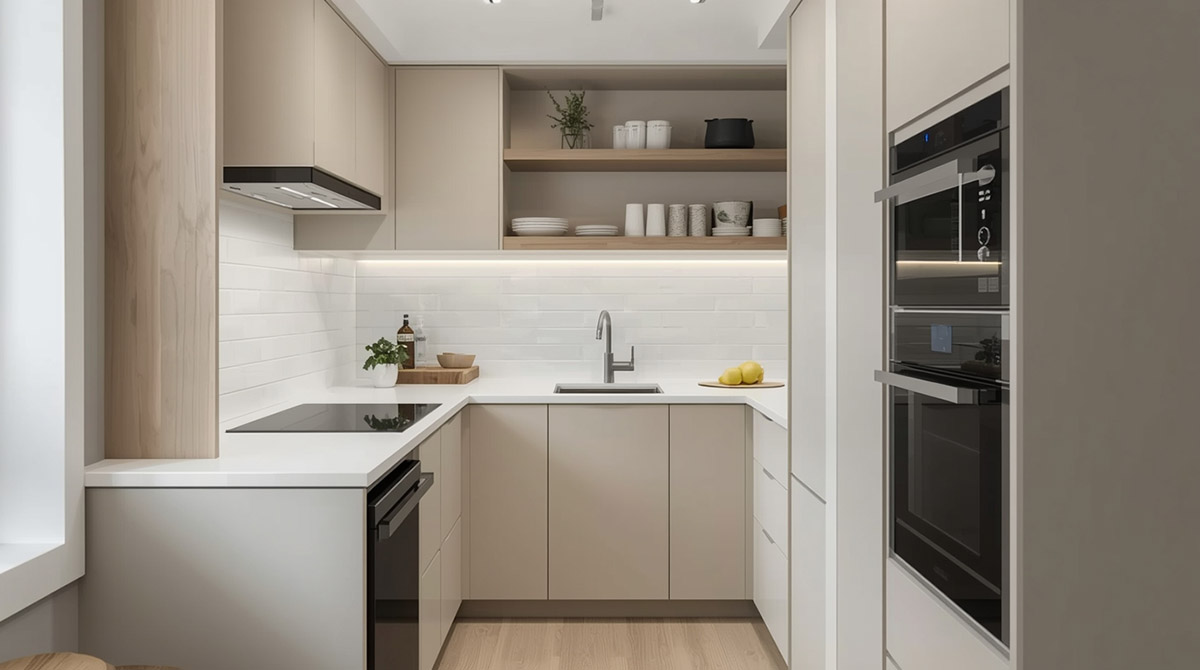
Kitchens with a hidden scullery
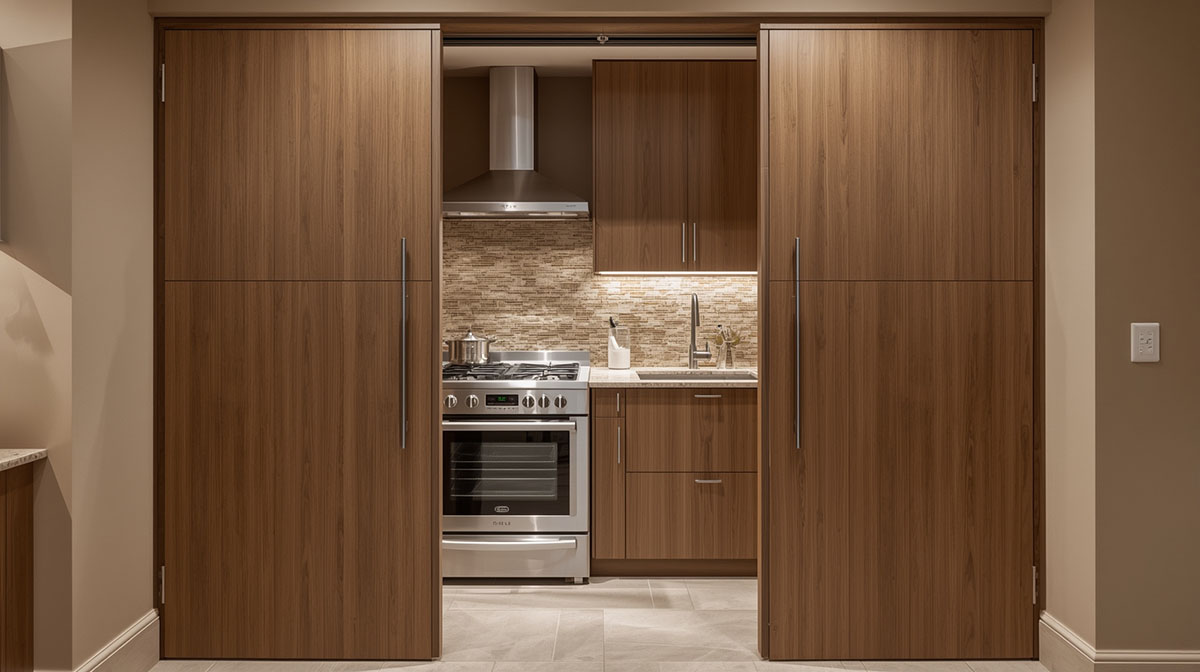
The concealment of a prep kitchen or scullery can be one of the most elegant solutions. Hidden sculleries allow the main kitchen to keep a clean and uninterrupted appearance, while also gaining additional functionality. The kitchen appears calm and clean, and daily activities continue unabated behind closed doors.
Some common strategies to conceal the back kitchen include:
-
Pocket doors;
-
Cabinet-matched doors;
-
Flush-panel systems.
This approach heavily relies on cabinetry design. Panels that match main kitchen finishes and doors that blend seamlessly with surrounding cabinets all help to create the illusion of an integrated space. When closed, the scullery disappears; when opened, it reveals the fully equipped work zone.
Scullery dimensions and space planning
The scullery does not need a mansion to be included. However, you must respect proportions. Even though kitchen with scullery layouts can vary, all functional ideas share the following features:
-
Start at least 5-6 feet wide;
-
Prioritize circulation over excess cabinetry;
-
Aggressively use vertical storage.
Proportions are important for a good scullery kitchen design. There has to be enough space to allow residents to move around comfortably, access storage, and perform tasks efficiently, but it doesn’t have to be large. The key is to exercise balance; overfilling a scullery with cabinets is just as bad as underutilizing them.
Scullery cabinets and shelving
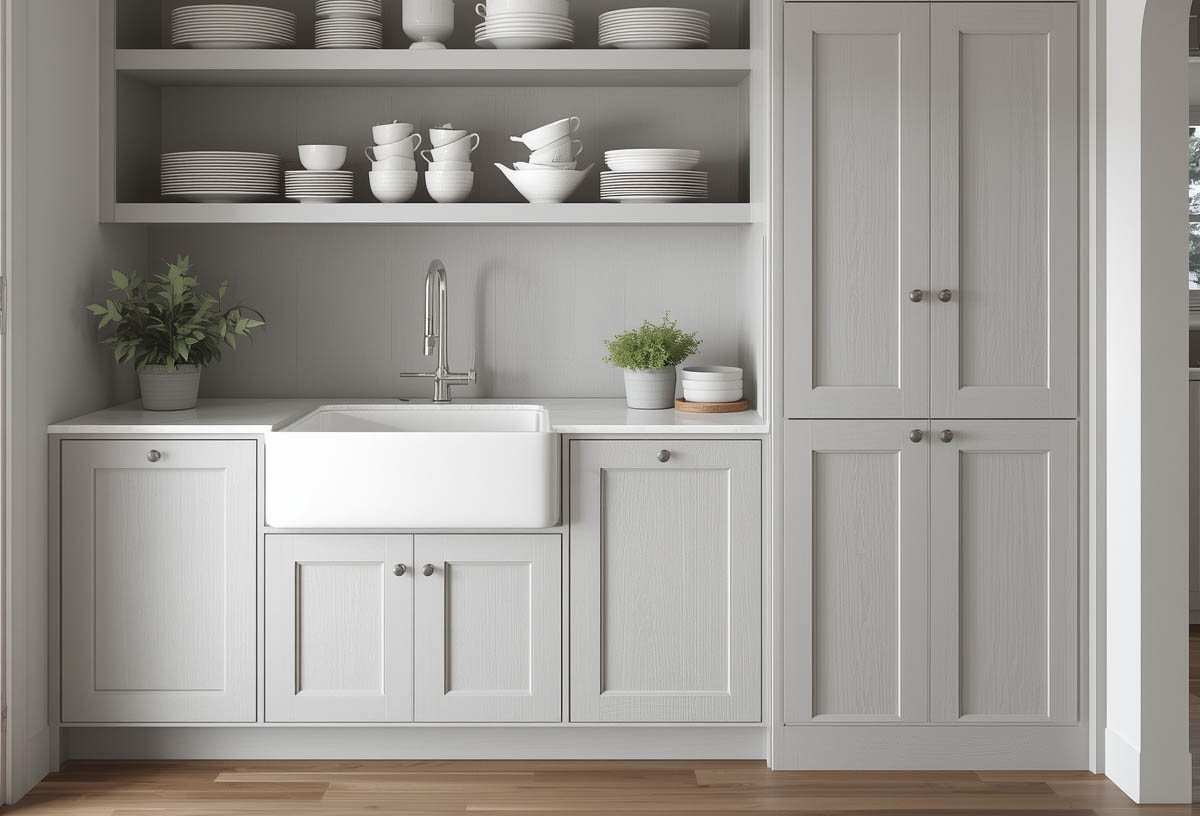
If the main kitchen is the face of the home, a meal prep kitchen is its engine room. Cabinetry in this area must be sturdy, logical, adaptable, and robust. Materials must withstand moisture, temperature fluctuations, and daily wear. Internal storage should simplify everyday tasks rather than complicate them.
Scullery vs pantry
The terms pantry and scullery are often used interchangeably, but they refer to different concepts. A scullery is traditionally used for cleaning and preparation. A pantry is primarily for storage. And a butler’s pantry falls somewhere in between, usually acting as a service area.
|
Space |
Primary function |
Typical cabinetry |
|
Scullery |
Washing, prep, utility |
Durable cabinets, deep sinks |
|
Butler’s pantry |
Serving & storage |
Display cabinets, counters |
|
Pantry |
Food storage |
Tall cabinets, shelving |
A modern kitchen scullery is able to incorporate all of these features, including storage capacity of a pantry, the functionality of a scullery and presentation of butlers' pantry.
Choose the right layout for your house
The decision to design a kitchen with a prep kitchen is ultimately based on how you would like your home to function. The impact of a scullery is felt daily when it's designed with care, supported by intelligent cabinetry and tailored to your real habits.
Modern kitchen designs with a scullery represent a change in our thinking about how the kitchen works. It's less about the spectacle and more about substance. Once you have experienced that balance, it will be difficult to design a kitchen without it.